News
Economists at Large make a submission to palm oil inquiry
Aug 15th
We’ve made a submission to the House of Representatives Standing Committee on Economics inquiry into proposed amendments to food labeling regulations. The amendments would make it compulsory for products containing palm oil to say that they contain palm oil, as opposed to a general “vegetable oil”.
The production and consumption of palm oil involves costs that are not always incorporated into market prices, referred to by economists as “external costs” or “externalities”. Examples of externalities associated with the production of palm oil include deforestation, reduction of wildlife habitat and health impacts associated with the consumption of saturated fats.
We welcome the move towards improved labeling. Improved labeling allows consumers to make better purchasing decisions and enables producers to differentiate their products from those of their competitors. We believe the amendments should be passed and urge the committee to look into extending labeling requirements to other types of vegetable oils, which can have similar externalities associated with their production.
What’s a whale worth? Valuing whales for National Whale Day
Jul 1st
A new report released today shows that visiting whales are a highly valuable asset to communities around Australia. The report for the International Fund for Animal Welfare (IFAW) shows that the value of a single whale to local Australian coastal economies can be as high as $1.25 million.
The results, released to coincide with the end of the financial year and National Whale Day (July 2nd), show how important it is for Australia to continue protecting these iconic species.
Incorporating previous research which has shown a steady growth in the Australian whale watching industry, expenditure on whale and dolphin watching in Australia grew in real terms from $6.5 million to $47.1 million between 1991 and 2008, today’s release combines data from whale watching with the latest whale population data to estimate the value a single whale to three Australian whale watching regions: Hervey Bay (QLD), Warrnambool (VIC) and Broome (WA).
“We know that whales are priceless’’ said Isabel McCrea, IFAW, Oceania Regional Director ’’but this report highlights the financial importance of whales to the tourism industry and jobs in regional Australia. It shows that actions to protect these beautiful animals provide both conservation benefits and strong economic benefits to coastal regions of Australia”
The report, entitled What’s a Whale Worth? Valuing Whales for National Whale Day was commissioned by IFAW and conducted by Economists at Large.
In Hervey Bay, Queensland, the birthplace of commercial whale watching in Australia, the industry has grown from 11,000 passengers in 1987 to 64,000 in 2008. The value of an individual humpback whale to the Hervey Bay tourism industry is estimated at $97,000 in present value terms.
In Victoria, Warrnambool is one of the most popular land-based whale watching location in Australia. Due to a relatively large tourism industry based on whale watching and lower population levels for Southern right whales, the value of an individual southern right whale to the local economy is $1.25 million in present value terms.
Broome, in Western Australia, is a relatively new location for whale watching, with the first dedicated boat-based tours being offered in 2008. This is despite the waters of the Kimberley being visited each year by the largest population of Humpback whales in the world. The value of an individual humpback whale to the Broome economy is estimated at $32,000 in present value terms.
Founded in 1969, IFAW saves animals in crisis around the world. With projects in more than 40 countries, IFAW rescues individual animals, works to prevent cruelty to animals, and advocates for the protection of wildlife and habitats. For more information, visit www.ifaw.org. Follow us on Facebook and Twitter.
Ecolarge review calls into question aspects of Boggabri coal economic assessment.
Feb 10th
UPDATE:
The proponent submitted a response to our review of the assessment. Our response to the proponent’s response can be downloaded below:
Original post below.
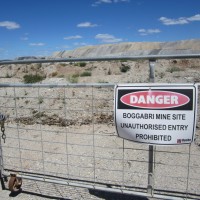
Economists at Large have undertaken a review of Appendix Q – Economic assessment of the environmental impact statement into the continuation of the Boggabri Coal Mine, located in north-central New South Wales.
We have found several issues that call into question aspects of the analysis presented by the Economic Assessment. These issues are:
- No economic analysis of scenarios have been undertaken other than cessation of mining in 2011 and a 21 year, open cut extension despite seven alternative scenarios being mentioned in the Environmental Assessment report.
- Mixing of private financial values and public economic values within the cost-benefit analysis.
- Miscalculation and/or omission of external costs and benefits.
The result of these issues is that the assessment – the cost-benefit analysis and then carried on into the economic impact assessment – present values that inflate public benefits and under estimate public costs. The assessment seems to avoid discussion of distribution of benefits between stakeholders and fail to assess all alternative methods of expanding this mine.
In summary, the overstatement of benefits and understatement of costs of the project mean that the modelling results for the Economic Impact Assessment are heavily compromised and should not be used for decision making purposes.
Click here to download the full review and findings.
Click here to see further details of the project on the NSW Planning website.
The proposed boat ramp and breakwater at Bastion Point doesn’t make economic sense.
Nov 29th
Our review of yet another attempt to justify the economics of the proposed boat ramp and breakwater development at Bastion Point has shown that it will not deliver a net benefit to the local economy. In-fact, it may just do the opposite and have an adverse impact on overall tourism to Mallacoota while also incurring significant annual maintenance costs.
The economic justification for the proposed development has been shown on repeated occasions to be lacking. Any purported economic benefits used to defend the currently proposed scale of breakwater and boat ramp need to be disregarded in the public debate. The forecasted economic benefits only serve to deflect debate away from options for a development that will meet all the desired objectives with fewer negative impacts.
Download our one page review of the latest economic analysis
Bastion Point Boat Ramp: Economic Analysis Round 4 – Still not convinced
Aug 2nd
Economists at Large has undertaken a rapid review of the forth round of economic assessment of the proposed Bastion Point boat ramp and breakwater development in Mallacoota – far eastern Victoria. Ecolarge have been involved in the Bastion Point boat ramp and breakwater project for many years, having appeared as an expert witnesses for the Save Bastion Point community group in 2008 during the Environmental Effects Statement (EES) inquiry. In 2008, the independent EES panel found that the economic case for the proposed development was weak, in line with our findings (download our original review below).
Despite subsequent reports and findings showing that the project would be of little or no value to the local economy, the East Gippsland Council has commissioned yet another economic assessment, not willing to allow this project to be dead and buried.
Given the costs of the project and the amount of local opposition it faces, we believe there must be a convincing and thorough economic case for the project to be approved. Our review of this latest report has found the economic case to be neither convincing nor thorough.
This latest report adds no new economic analysis or data that improves the business case for the development, and yet it has managed to inflate the benefits of the ramp substantially. The results of this report run directly contrary to the findings of the EES Panel Inquiry Report that concluded that “the economic case for the proposals based on increased recreational ocean boating is flawed” (page 135).
Our assessment of this latest report has turned up errors in the methodology used to assess a public infrastructure project which results in the economic case for the project being overstated. We conclude once again that the economic case for the development is grossly insufficient and is in-fact likely to be economically destructive to local finances with dubious tourism benefits to the local economy.
Based on our review, we would recommend that this project not be approved based on the economic case for the ramp outlined in the Buchan Report.
Ecolarge Bastion Point boat ramp and breakwater review – Buchan (2010)
Ecolarge Bastion Point boat ramp and breakwater review – Pryor (2008)
Report by Victorian Auditor-General’s Office reaches same conclusions as Ecolarge
Jun 26th
A report by the Victorian Auditor-General’s Office has found that food bowl modernisation and north-south pipeline plans were not backed by a strong business case and alternatives were not adequately explored.
http://www.theage.com.au/environment/water-issues/brumby-water-plan-damned-20100609-xwua.html
These findings mirror the findings of Economists at Large for the desalination plant in our submission to the Standing Committee on Finance and Public Administrations’s inquiry into the Business Case for Water Infrastructure.
In the submission, Ecolarge concluded that there had been inadequate analysis conducted on water policy in Victoria and that the “Our Water Our Future” plan had not been subjected to any serious public economic analysis. Economists at Large suggested that a levelised cost of water delivery approach should have been used to properly assess alternatives and that with figures and analysis at the time, a desalination plant did not appear to be the most efficient water policy option.
The original report released by the Auditor-General’s office can be found at the link below:
Website for inquiry: http://www.parliament.vic.gov.au/standing-committee-on-finance-and-public-administration/inquiries/article/594
Ecolarge submission: http://www.parliament.vic.gov.au/images/stories/documents/council/SCFPA/water/Submissions/SCFPA_Water_27.pdf
Whale Watching Worldwide – Report Released
Jun 23rd
(Madeira, Portugal — 23 June 2009) -A new report released today by the International Fund for Animal Welfare (IFAW – www.ifaw.org) documents massive growth in the global whale watching industry over the past decade. The new report, Whale Watching Worldwide, comes as more than 80 countries debate the future of whaling and whale conservation at the 61st annual meeting of the International Whaling Commission (IWC) in Madeira, Portugal.
The new, country-by-country economic analysis shows more than 13 million people took whale watching tours last year in 119 countries worldwide, generating ticket fees and tourism expenditures of more than US$2.1 billion (more than AUD $2.8 billion) during 2008. The report also shows dramatic growth of the whale watching industry in Asia, the Pacific, South America, the Caribbean and Europe significantly outpacing global tourism growth rates over the past decade. More than 3,000 whale watching operations around the world now employ an estimated 13,200 people.
The Minister for the Environment, Peter Garrett, welcomed the new report and formally introduced it to government delegations attending the Madeira IWC meeting.
I commend IFAW for producing this very timely report. At a time when our global economy, our planet’s great whales and international whale conservation efforts are all under threat, it is encouraging to see coastal communities across Australia, the Asia Pacific region and worldwide reaping massive benefits from the dynamic growth of this form of ecotourism (The Hon Peter Garrett)
“While governments debate what to do about whales, their citizens are pointing the way,” said Patrick Ramage, IFAW Global Whale Program Director. ”Animals, people and the global economy all do better when whales are seen and not hurt. We should be conserving whales in 2009 and shooting them with cameras, not compromising conservation measures and expanding commercial whaling.”
Australia saw more than 1.6 million people go whale watching. This represents an annual growth rate of 8.3% since the last global report was compiled in 1998, generating almost AUD$264 million for our economy.
“Ten years ago the Million Watch Club for whales consisted of the USA, Canada and the Canary Islands-now Australia has pushed past the Canary Islands to join Canada and the United States to be a part of the exclusive club of three,” said IFAW Asia Pacific Director, Erica Martin.
The past decade shows continuing growth and redistribution of whale watching in Australia, with an expansion of activity into new locations as well as some areas seeing a maturing industry where tourist numbers have plateaued or even declined such as in Victoria (mainly due to fluctuations in annual visitation of both whales and tourists).
“A significant increase was seen in Tasmania with a staggering average annual growth rate of 37.6%, followed by New South Wales with 14.7% growth” said Ms Martin.
Port Stephens attracts the largest annual number of boat-based whalewatch tourists anywhere in Australia, receiving just over 270,000 tourists in 2008, more than 80% of whom were there for dolphin watching tours.
International research, data collection and analysis for the IFAW report were conducted over the past 18 months by Economists at Large and Associates of Melbourne, Australia.
The report can be downloaded at www.ifaw.org/whalewatchingworldwide
Executive summary is available at www.ifaw.org/wwwsummary
::CONTACTS::
Patrick Ramage (IFAW) at the IWC meeting
+1 508-776-0027, pramage@ifaw.org
Erica Martin (IFAW Asia Pacific – Sydney)
+61 2 9288 4999, emartin@ifaw.org
Simon O’Connor (Economists at Large – Melbourne)
+61 (0)401 360 500, simon@ecolarge.com
::PRESS::
[ENGLISH]
http://news.bbc.co.uk/2/hi/science/nature/8114353.stm
http://news.theage.com.au/breaking-news-world/whales-worth-more-alive-than-dead-20090624-cvmb.html
http://www.abc.net.au/news/stories/2009/06/24/2607050.htm?section=australia http://dotearth.blogs.nytimes.com/2009/06/23/whale-watching-trumps-whaling/?hp
[PORTUGUESE]
http://www.acorianooriental.pt/noticias/view/187183
A decade of whale watching – the global industry in 2008, new report by EcoLarge
Apr 22nd
For over a year, EcoLarge have been gathering data from whale, dolphin and porpoise watching tourism operators all over the world, in an effort to quantify the size of the industry globally.
The work was commissioned by the International Fund for Animal Welfare (IFAW) and will be the most comprehensive report of its kind since the 2001 report entitled: “Whale Watching 2001: Worldwide Tourism Numbers, Expenditures, and Expanding Socioeconomic Benefits“.
Now in it’s final stages, the report is due for release in the next two months, watch this space!
Economists at Large – economists without borders
Mar 2nd
In late 2008 and early 2009, Economists at Large consultants have been involved in projects in Indonesia and Laos, working on projects in forestry, urban development, ecosystem services and sustainable development. For these projects, EcoLarge has worked with international and local NGOs, Government departments, local communities and international institutions.
As well as this, an international team of eleven associates across four contintents, speaking ten languages is currently in the final stages of preparing the Worldwide Whale Watching report, commissioned by the International Fund for Animal Welfare (IFAW) and due for release in the coming months. This report will be the most comprehensive global review of whale, dolphin and porpoise watching tourism since 2000.
We look forward to continuing our internationally focused work as we continue to build our expertise.
Parliamentary Enquiry into channel deepening supports EcoLarge findings
Sep 11th
The Standing Committee on Finance and Public Administration’s final report on the Port of Melbourne’s channel deepening project was handed down recently. Findings of this report correlate closely with the findings of earlier work by EcoLarge, in particular that the benefits to the state of Victoria have been laregly overstated in the economic modelling. We believe that the channel deepening project continues to display an ever weaker business case, with largely under estimated costs, and inflated benefits – Victoria’s own concorde project.
More details at:
http://www.parliament.vic.gov.au/council/SCFPA/PtPhillip/default.html
http://www.ecolarge.com/reports